Ancestor story • Earl Hemmert
The Story Behind the Mining Accident
April 29, 1915 – February 9, 1957 • Surname: Hemmert
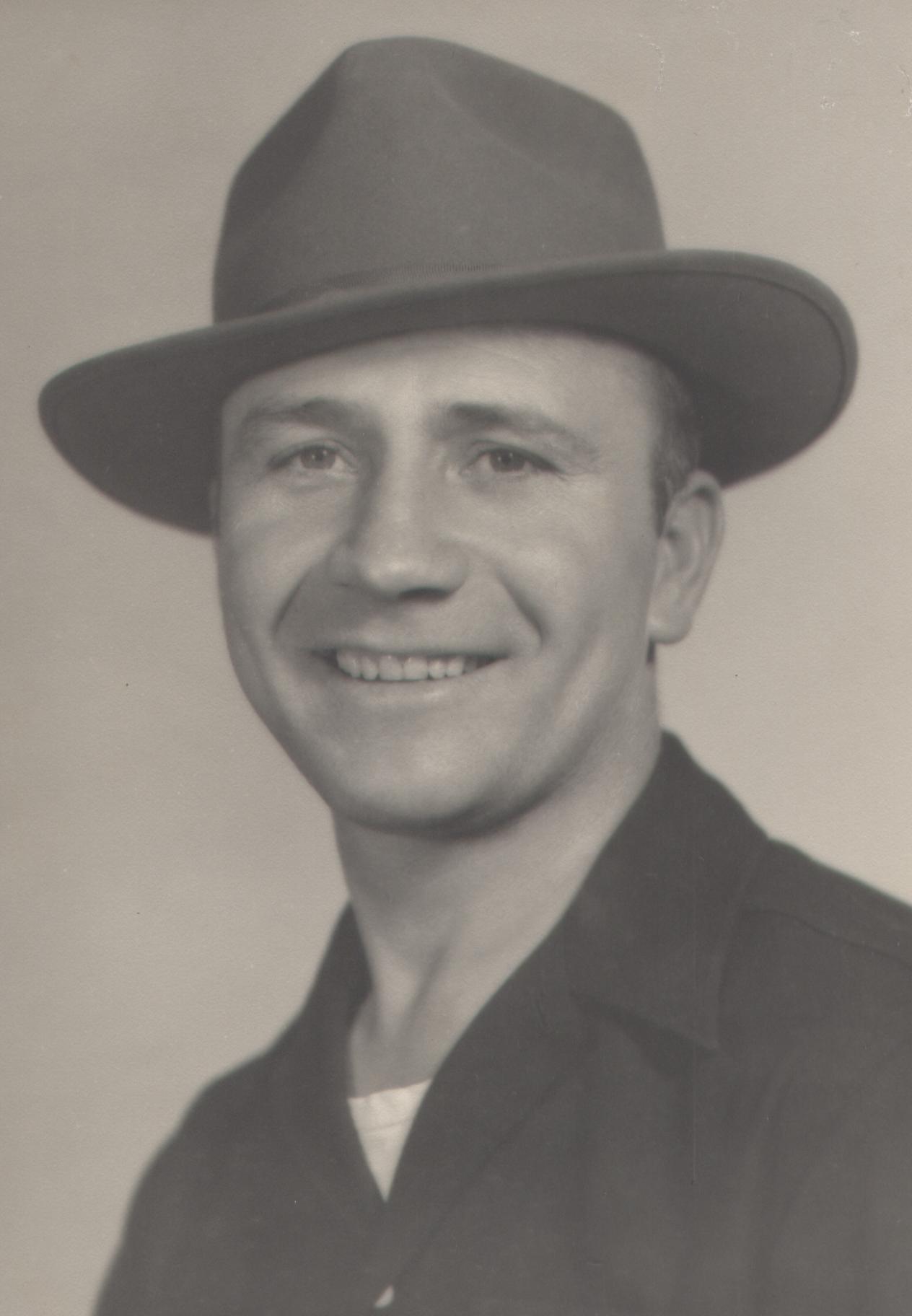
For as long as I can remember, I knew one thing about how my grandpa Earl died: He died in a mining accident.
That was the story—or at least, that was all of the story I knew. My dad was only five years old when he lost his father, and whenever I asked what had happened, there weren't many answers.
For most of my life, his death had been summed up in a single sentence: “He died in a mining accident.” But I wanted to know more. I wanted to know what happened that day—and, in the process, to know the grandfather I never had the chance to know.
So I went searching.
Before the Mine
Earl Hemmert was born in Paris, Idaho, on April 29, 1915, the seventh of ten children. His father had come to America from Denmark, and his mother was from Switzerland.
At 26, Earl married Margaret Tremelling. Their newlywed years were interrupted almost immediately by war. Before they had celebrated their first anniversary, Earl left to serve during World War II. He served in the United States Army as a weapons crewman and served in both the European and Pacific campaigns.
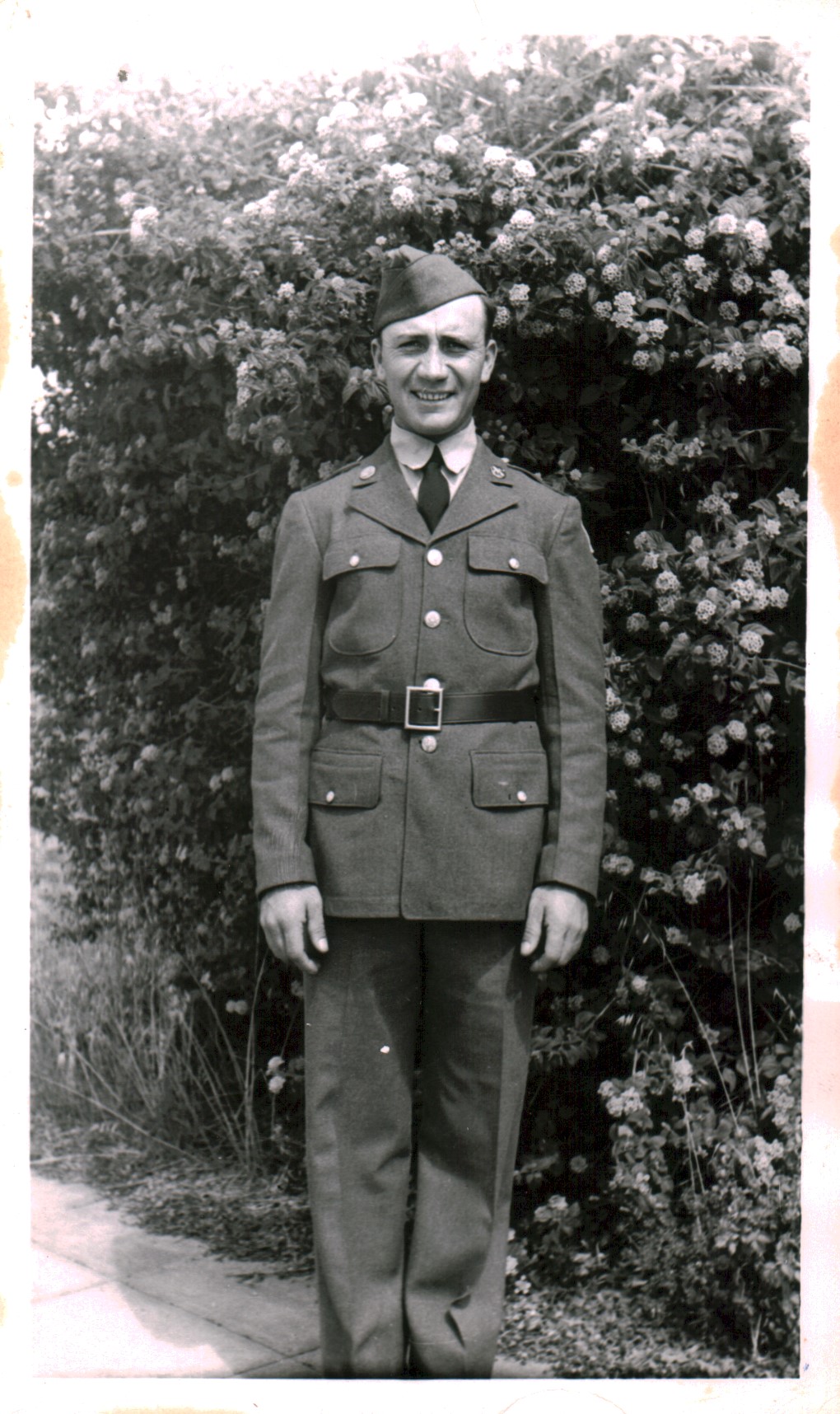
Earl in uniform during the World War II years.
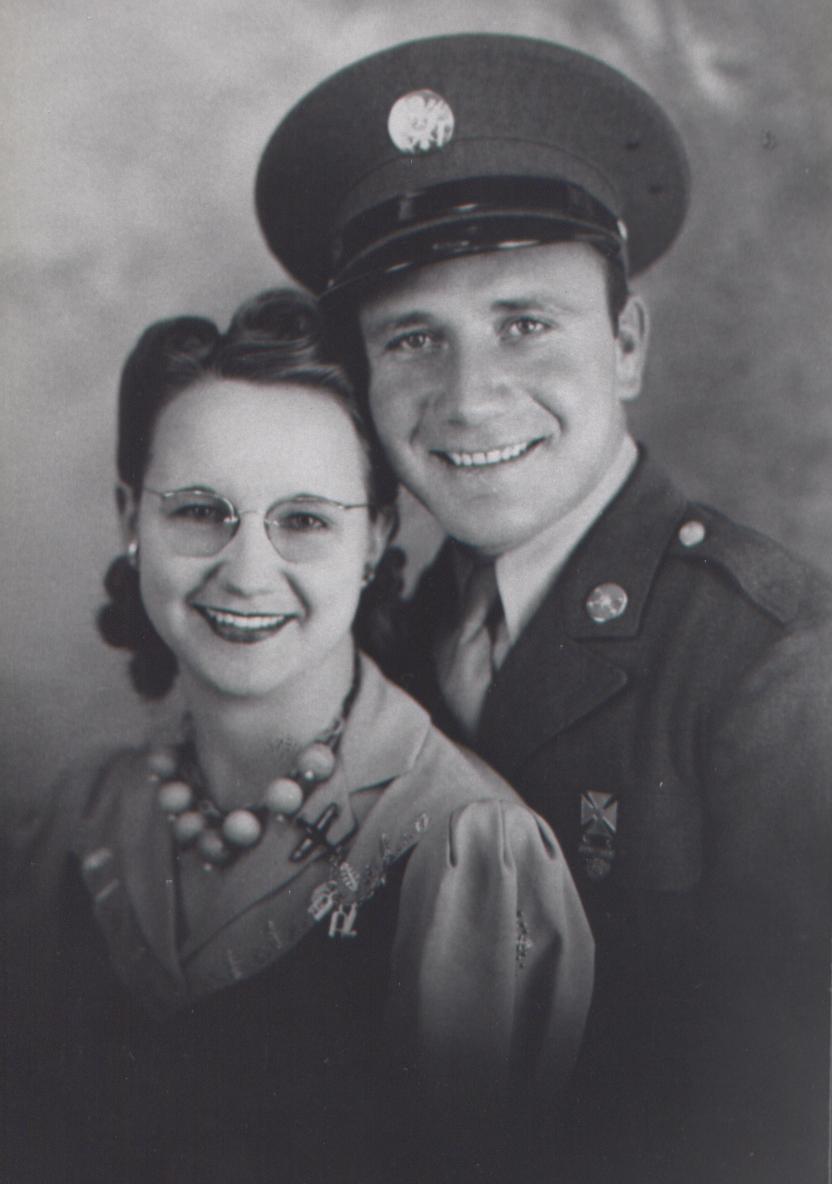
Earl and Margaret.
When the war was over, Earl returned home to Margaret and together they continued building their family. They had six children. Their first two, twins, tragically died at birth. In the years that followed came two sons, a daughter, and one more son—the youngest, my dad.
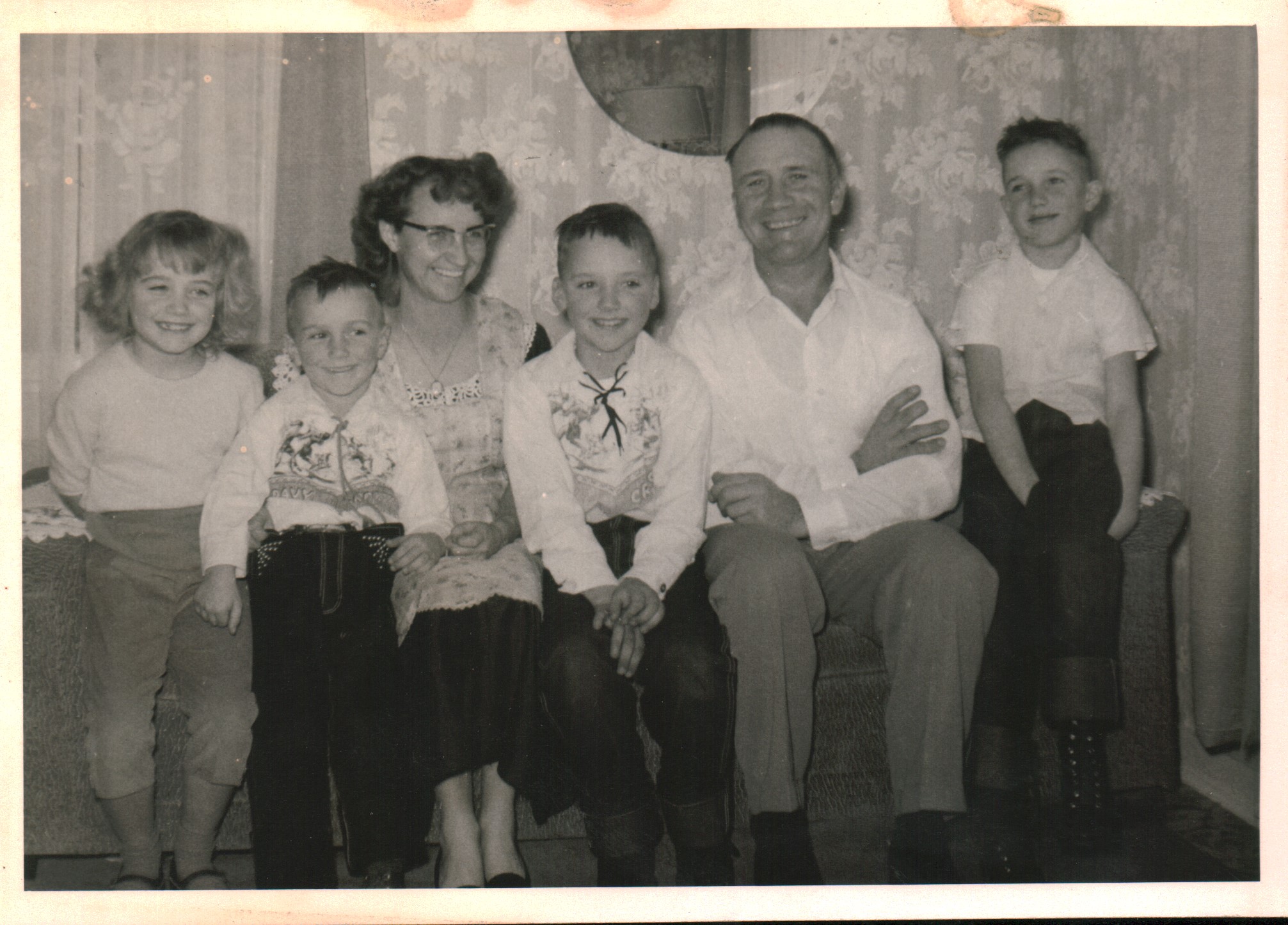
Earl and Margaret with their children.
There was more to Earl than work and war. The photographs that remain give us little glimpses of the man his family knew: Earl beside Margaret, Earl in uniform, Earl surrounded by his children, and Earl with a fishing pole in his hand.
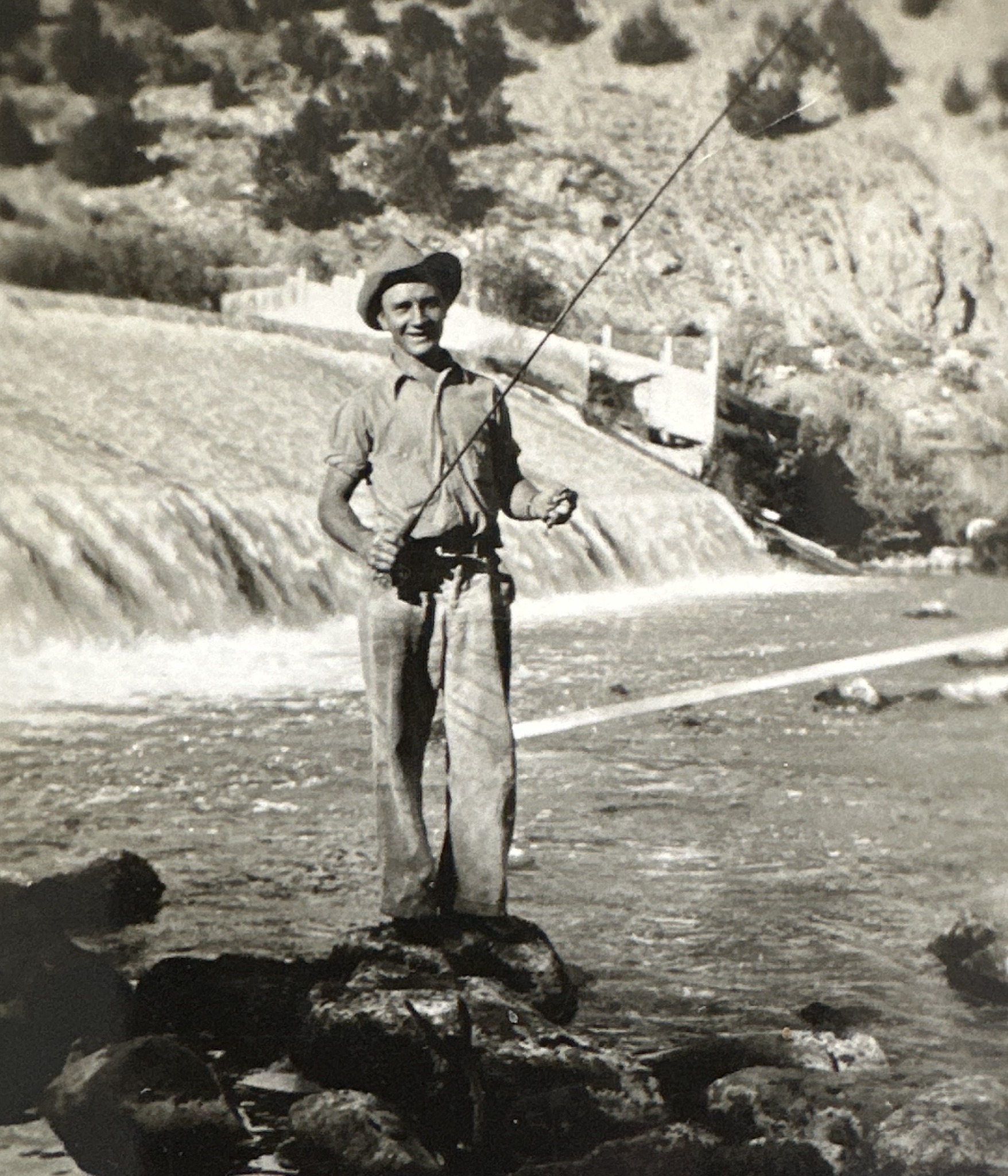
An ordinary moment that helps us see Earl as more than a name in the records.
The Accident
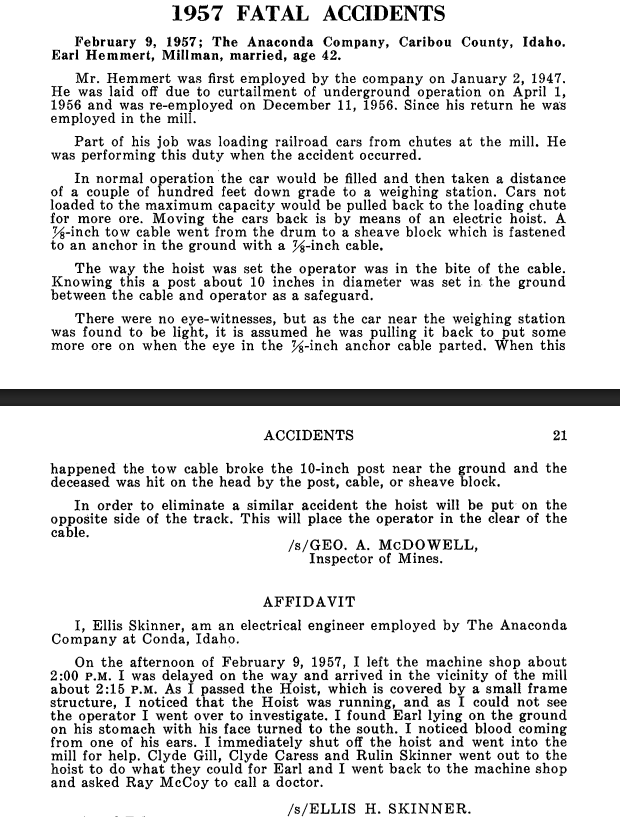
On February 9, 1957, Earl was working at the Anaconda Company's operation in Caribou County, Idaho. Part of his job was loading railroad cars with ore from chutes at the mill. A filled car traveled a couple hundred feet downgrade to a weighing station. If it was under capacity, it was pulled back so more ore could be added.
Earl used an electric hoist and a heavy 7/8-inch tow cable. The cable ran from the hoist drum to a sheave block, which was fastened to an anchor in the ground with another 7/8-inch cable.
The hoist controls placed the operator in what the official mining report called “the bite of the cable.” A wooden post about ten inches in diameter had been set between the operator and the cable as a safeguard.
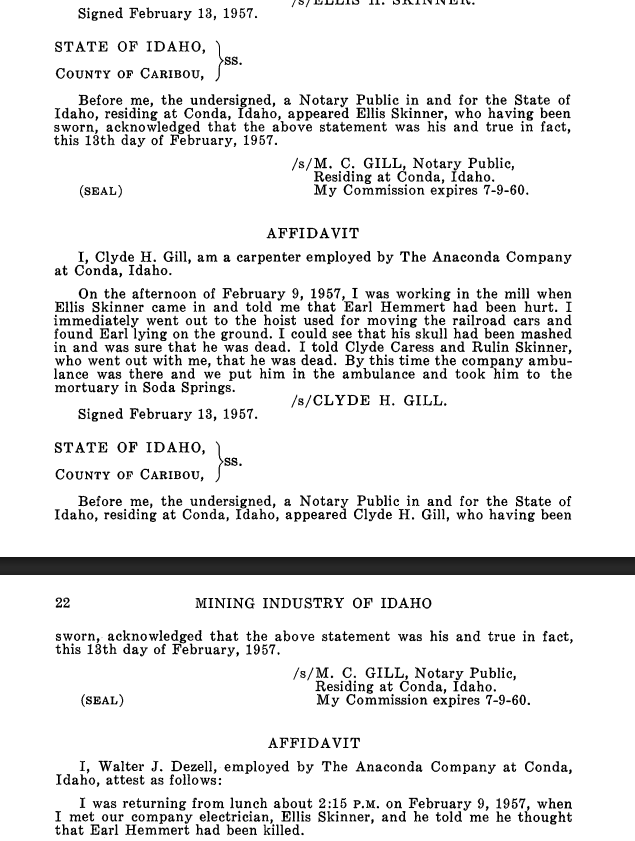
There were no eyewitnesses. At about 2:15 p.m., electrical engineer Ellis Skinner passed the hoist and noticed it was running. When he could not see the operator, he investigated and found Earl lying face-down on the ground. Skinner shut off the hoist and ran for help. Another employee, Clyde Gill, came to the scene and found Earl already dead.
Investigators believed the ore car had been near the weighing station and was being pulled back toward the loading chute when the anchor cable broke. The ten-inch safety post also broke near the ground. The official report concluded that Earl had been struck in the head by the post, cable, or sheave block. With no witness, exactly what struck him could not be known.
What Changed After Earl's Death
The investigation did more than describe what may have happened. Idaho Inspector of Mines Geo. A. McDowell recommended that the hoist be moved to the opposite side of the track. The purpose was explicit: to place the operator clear of the cable and eliminate a similar accident.
Nothing could undo what happened. Margaret lost her husband. Four children lost their father. My dad was only five years old. But investigators recognized that another man should not have to stand where Earl had been standing.
The surviving report documents the recommendation; without further evidence, I don't want to claim more than the record tells us. What we can say is that Earl's death exposed a danger and prompted an official recommendation intended to prevent a similar accident.
More Than a Mining Accident
When we build a family tree, it is easy to reduce a life to a few facts: born, married, served, died. But there was a life between those dates.
Earl was a son of immigrants. One of ten children. A husband. A father who had known the heartbreak of losing two babies. A soldier who left his young wife and went to war. A man who came home, built a family, went fishing, worked hard, and provided for the people he loved.
And he was my grandpa.
For years, I wanted to know what happened in that mine. Somewhere along the way, I realized I was looking for something even more important.
Records can never give us everything. They cannot tell me what his laugh sounded like, what he talked about around the dinner table, or what dreams he had for his children. But photographs, memories, documents, and the stories passed down to us can give us pieces.
Earl's life ended in that mine. His story didn't.
For most of my life, I knew how my grandpa died. Now I know more about how he lived. And that is the part of his story I most want to remember.
Because every branch has a story—and every story is worth telling.
Research note. The contemporary mining report described Earl as age 42. Based on the birth date April 29, 1915 and accident date February 9, 1957, he was 41.