Ancestor story • Alma Reber Hopkins
Finding a Way Forward: The Hard Work and Perseverance of Alma Hopkins
April 20, 1898 – October 1, 1973 • Surname: Hopkins
Hard work shaped Alma Reber Hopkins’ life from an early age. Through setbacks and uncertainty, he kept looking for a way forward, determined to provide for the family who depended on him.
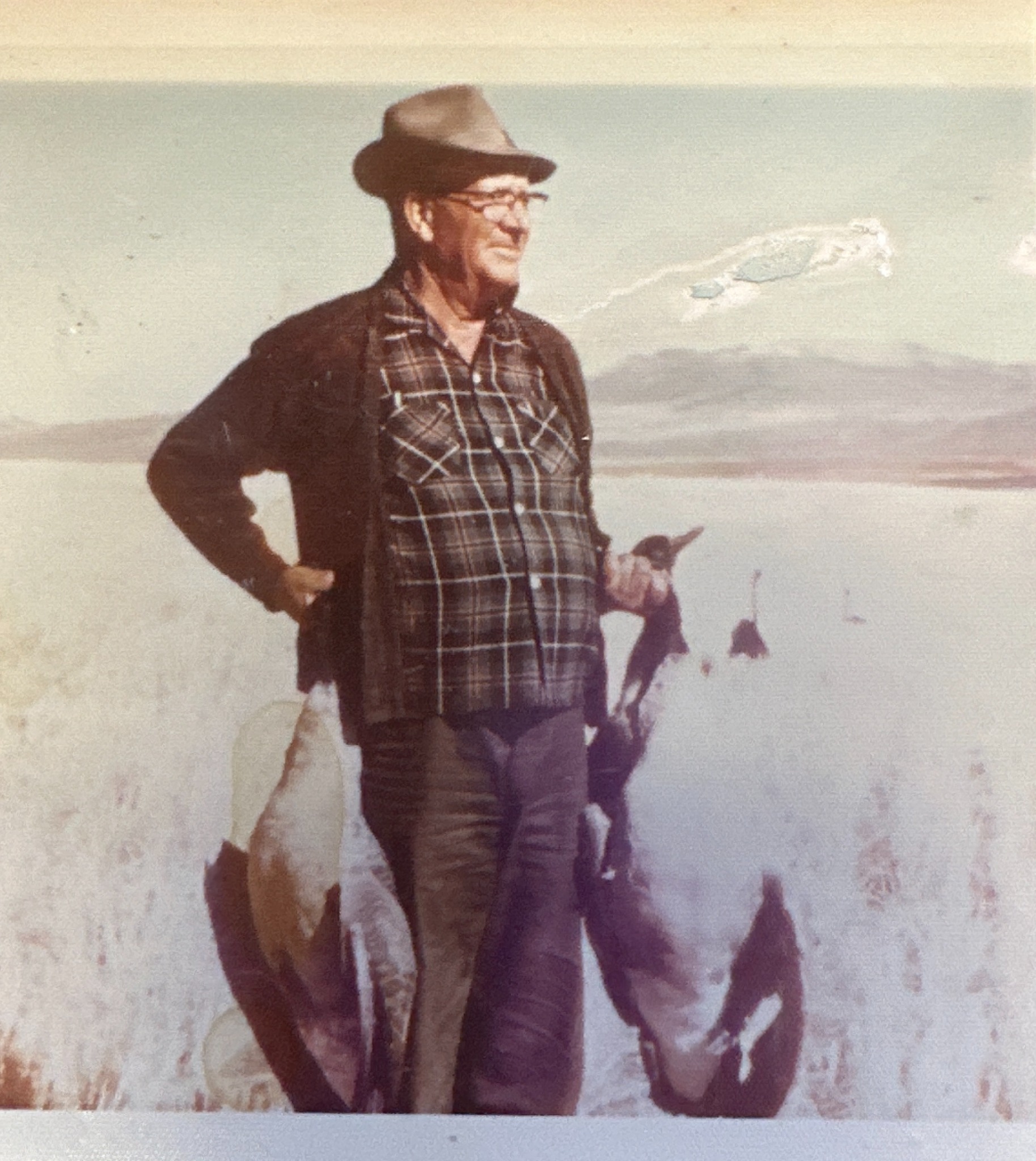
Alma grew up in Soda Springs, Idaho. His first job was tending to cows. At about eight years old, he gathered cows from townspeople’s corrals after their morning milking, herded them on the open range, and brought them home for milking that evening. Looking back, he recalled, “I and Howard Thirkill herded cows for two years on foot.” Those miles on foot gave the two boys something to work toward: a pony they could ride.1
Alma and Howard saved their earnings in a little bank. Even the dimes a local man gave them for chewing gum went toward their goal. As Alma explained, “We would take it home and put it in our bank so we would have something to ride.” Eventually, they saved enough to buy a pony for $90, riding it together, bareback, as they tended the cows. It was an early show of his patience and hard work—qualities that would serve Alma through the hardships ahead.1
As I read his history, I keep coming back to Alma, the young boy. He learned early that getting what he wanted would mean working hard, waiting, and saving. In the years ahead, there would be times when even his best efforts could not prevent disappointment. What stands out to me is how often he found another way forward.
Learning Through Hardship
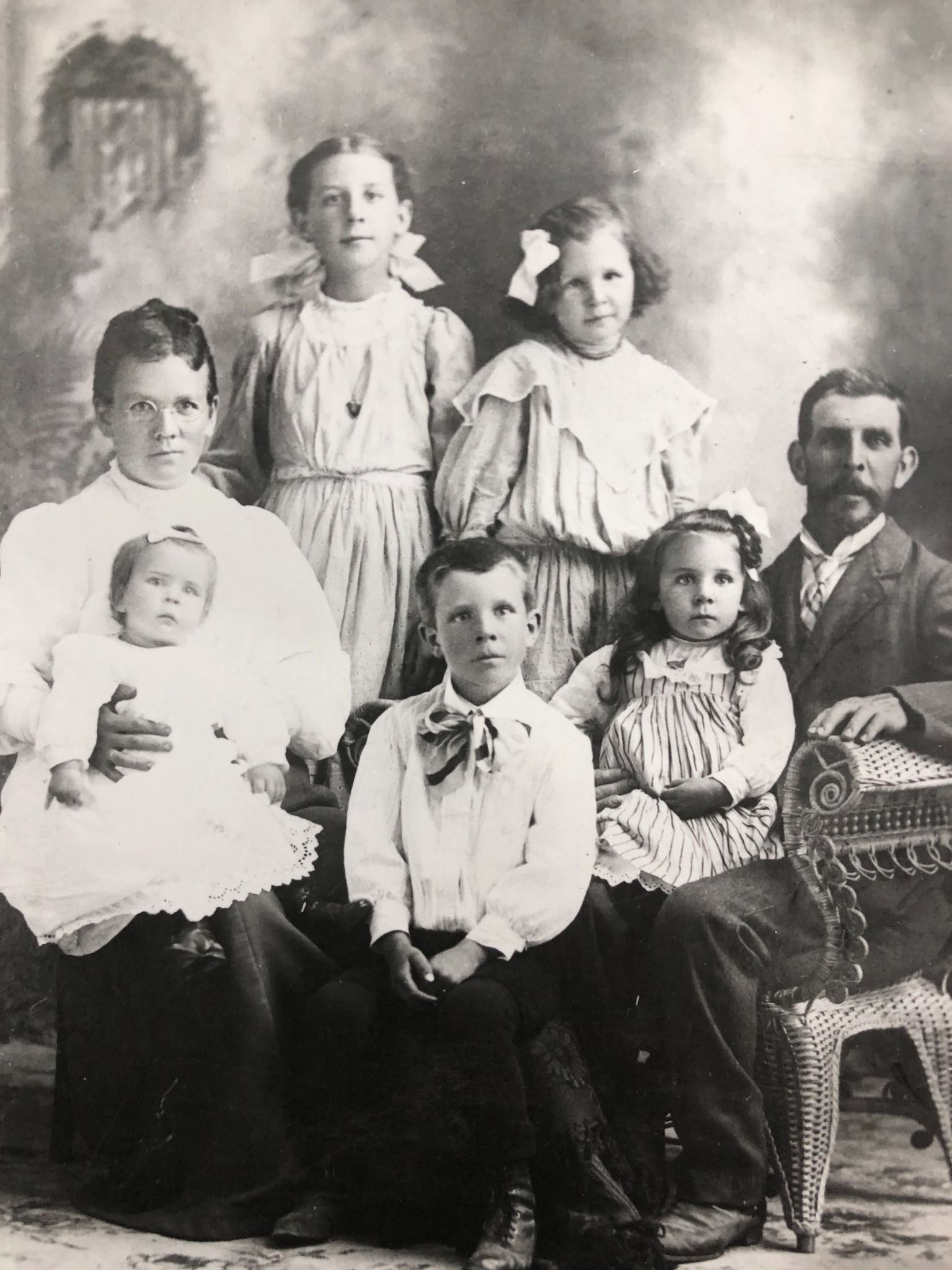
At eighteen, Alma ventured into farming with Chris Panting Jr. It was an opportunity to work toward something of his own, but the venture brought a hard lesson. His fall wheat froze, leaving a poor crop and expenses that still had to be paid. When his partner declined to share the costs and told him he could have the grain, Alma was left to make what he could of it.1
He hauled the wheat to the ranch where he was working, ground it with barley, and sacked the mixture to sell. Using a four-horse team, he took it to town. He later remembered that he had not made as much farming as he did working for $35 a month. The crop had disappointed him, but he still found a use for what remained.1
His willingness to work was also tied to his responsibilities at home. After working on railroad construction and supervising crews, Alma was offered a job in Nebraska paying $125 a month. But his father was aging and needed help. Alma had been giving his parents the wages he did not need for himself, and he felt responsible for their care. He turned down the offer and took nearby ranch work for $60 a month instead. In his recollection, the decision was straightforward: “I realized I had that obligation to take care of them.”1
Finding His Own Way
Alma married Myrintha Tolman Peterson on December 24, 1925. As their family grew, so did the responsibilities he carried. For years, he farmed and cared for sheep for Henry L. Finch. Then the Great Depression threatened the living he had worked to build. In the fall of 1931, Finch cut his wages and, a short time later, told him he could no longer afford to keep him employed.16
Alma had already been trapping and buying furs for extra income. Now he needed to find a way to support his family without the security of his ranch wages. He did not remember this time as a moment of easy confidence. He recalled crying and fearing that he would starve.
Myrintha urged him, “If you work for yourself like you have for H. L. Finch, you will make it anywhere!” Alma recalled that she gave him encouragement and stood by him. She believed in his efforts. That support mattered.16
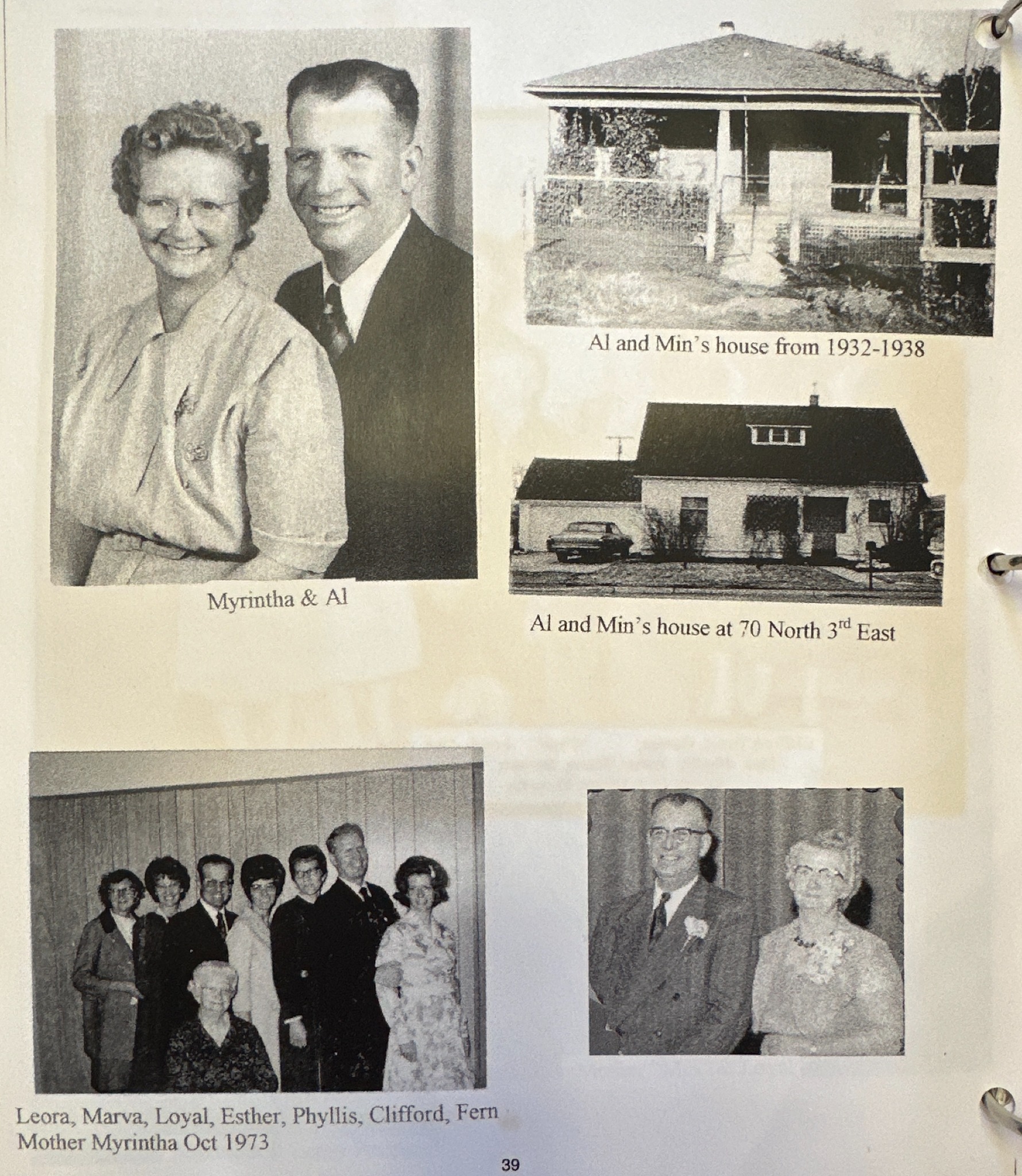
In 1932, Alma entered a partnership with Louie Goldstein, buying hides and pelts and gradually expanding into the sheep business. The work took him across Idaho and Wyoming, searching for opportunities during years when money was scarce.16
There were still obstacles. When they needed $500 to complete a sheep purchase, the bank declined their loan request. They turned to Dr. Kackley, who asked how much they needed—and then offered them $2,000. Alma’s perseverance included working hard himself, but it also included accepting encouragement and help when he needed it.16
A Devastating Loss
By May 1940, Alma and Louie had built a substantial sheep operation. Moving the animals to their spring range required care, and illness had caused losses on the trail the previous year. Alma learned that he needed to stay with the sheep night and day, watching their condition and trying to prevent another outbreak.12
In his own words, Alma recalled:
“This particular year I had 5,000 and I had been right along with them. ... I had two bands. I had been coming right through with them. Other years we had been having bighead. I was staying right there seeing how they was handled, wanting to see that they wasn’t starving and hungry when we hit certain parts of the trail which I thought was causing the bighead.
“I was on the school board here in town. I had been out for a couple of weeks on the dusty trail and I wanted a bath and I wanted to come home and see Mom and the kids and I had a school board meeting that night.”1
On May 13, he returned to town to see his family and attend a school board meeting. That night, while the sheep were bedded near the Blackfoot River, they became frightened and went over a rocky ledge. The newspaper reported that a barking ranch dog was thought to have startled them. Hundreds of sheep were lost.2
The exact number was uncertain in the first reports, but the scale of the loss was clear. These were valuable yearling ewes, representing a serious blow to the partners’ livelihood. Alma’s later recollection conveys how deeply the sight affected him:
“Sheep were twenty deep in there. Crews from town came out. We rigged up a scaffold to pull them out, to pull them up onto a ramp, and we pulled 9 sacks of wool off from them. I just stayed right there. I wouldn’t eat or anything else. I just stayed right there pulling wool. We pulled wool for three days and then we found 4 or 5 of them that had slid down into the crevice and were still alive.”1
They succeeded in rescuing those surviving sheep.1
He stayed at the scene for three days, helping recover wool and salvage what could be saved. I can only imagine what it meant to face such a loss after so many years of work. Alma continued in the sheep business. In September of that same year, a newspaper reported that a livestock association had purchased 445 ewes from him.3
Continuing On
Two years later, Alma faced another kind of hardship. On May 7, 1942, the local newspaper reported that he had been very ill with spotted fever at the Caribou County hospital but was improving. By May 28, another notice reported that he had recovered and was attending to his sheep again.45
Myrintha’s account gives us a closer look at what the family went through. She remembered that he had “a fever of about 107 for three weeks, with ice packs on his head.” Two nurses worked ten-hour shifts, and she relieved them for four hours each day.1
One morning at four o’clock, Dr. Kackley called Myrintha to ask for blood donors. “We’ve got to have it and we’ve got to have it in a hurry,” he told her. She called Frank Kunz, Earl Gunnell, and Tom Thompson, and all three went to donate blood. Alma later told her that he had felt as though he were about to fall over a precipice, and that receiving the blood helped him move away from the edge.1
When he was finally well enough to come home, the doctor warned Myrintha that the fever had put a severe strain on his heart and that he needed to be careful. But, as she recalled, “two days after he came home he had to go see the sheep.” Afterward, he was content to rest for a few days while he regained his strength.1
He remained in the sheep business until the fall of 1953. Around 1948, he also bought City Transfer and Storage with Roy and Bill Corbett and managed the business for about nineteen years. Even after selling it in 1967, he remained occupied with raising pigs, buying and selling hides and furs, and running errands for the family farming operation.6
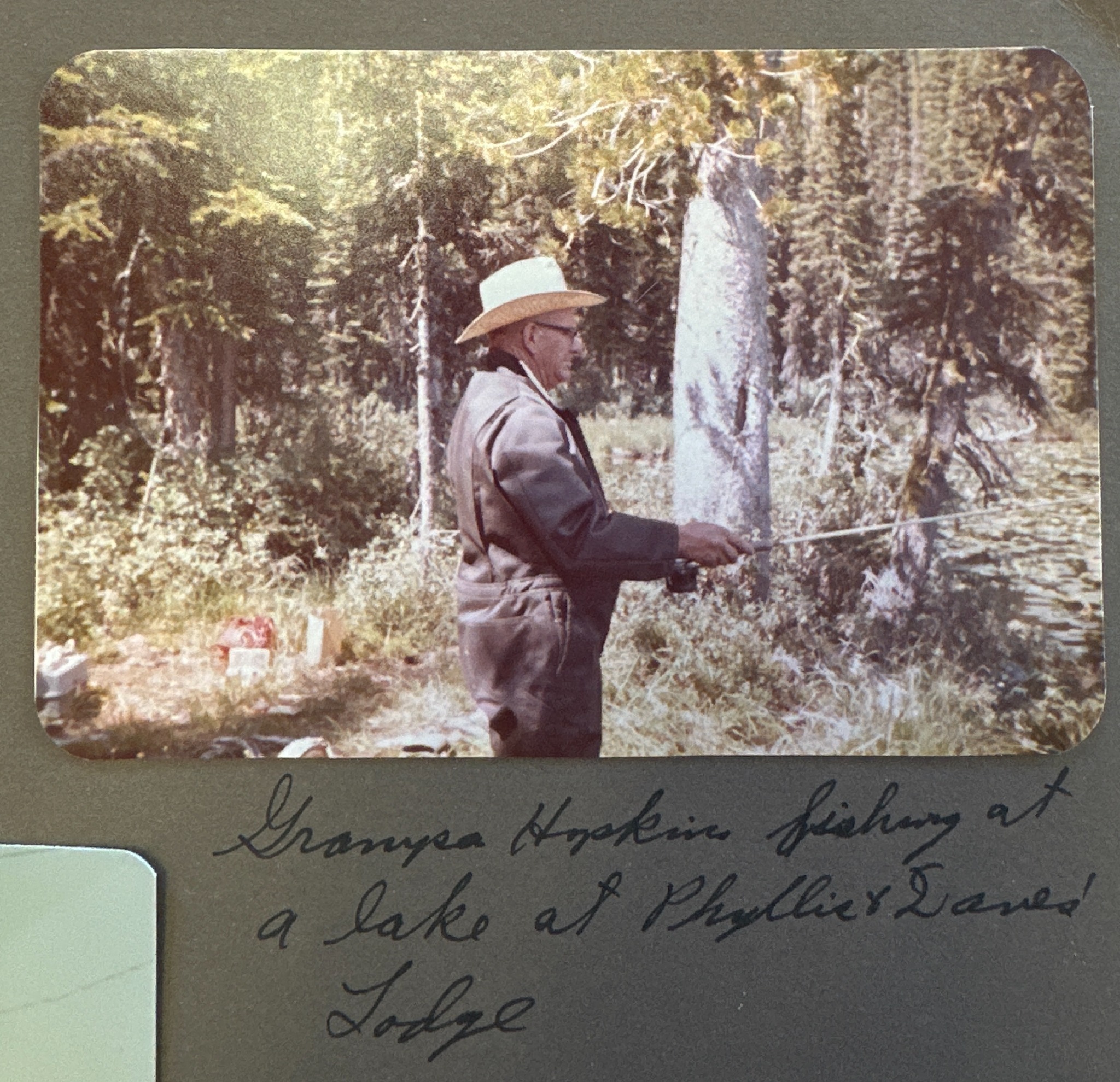
When I think about Great Grandpa Alma, I think of the boy who saved his dimes so he would not have to herd cows on foot. I think of the young farmer finding a way to sell a frozen crop, the son choosing to stay near his father, and the husband who was frightened by unemployment but encouraged by his wife to begin again.
His perseverance did not mean that he never felt afraid or that everything he tried succeeded. His own words tell us otherwise. To me, it meant that when one plan failed, he looked for what he could do next. Through years of responsibility, disappointment, and loss, he kept finding a way... forward.
- “Alma Reber Hopkins,” family history, supplied by the author, 25-page PDF. Includes Alma’s recorded recollections and accounts by family members. Childhood cowherding and pony purchase, PDF p. 1; first farming venture, pp. 9–10; employment decision and care for his parents, p. 13; marriage, Depression-era employment loss, Myrintha’s encouragement, partnership, and financing, pp. 15–17; sheep disaster and rescue efforts, p. 19; Myrintha’s account of his 1942 illness and recovery, p. 20. Compiler and compilation date not identified in the supplied excerpt. Quotations were checked against the scanned pages; line breaks have been removed and punctuation lightly adjusted for readability. Ellipses indicate omitted material. View source.
- “Half of Sheep Herd Plunges To Death Over Cliff,” Soda Springs Sun, May 16, 1940, p. 1. NewspaperArchive clipping supplied by the author. The report gives preliminary estimates of 400 to 1,000 sheep going over the cliff and says the exact number lost was not yet known. The draft therefore uses “hundreds” rather than a fixed total. View source.
- “Ewes Purchased,” Twin Falls Idaho Evening Times, September 11, 1940, p. 11. NewspaperArchive clipping supplied by the author. Reports the purchase of 445 crossbred ewes from Alma Hopkins, originating in the Heber Lau flock. View source.
- Soda Springs Sun, May 7, 1942, p. 8, brief notice concerning Alma Hopkins’s hospitalization with spotted fever. NewspaperArchive clipping supplied by the author. View source.
- Soda Springs Sun, May 28, 1942, p. 8, brief notice concerning Alma Hopkins’s recovery and return to attending his sheep interests. NewspaperArchive clipping supplied by the author. View source.
- “Heart Attack Claims Life Of Alma Hopkins,” continued as “Al Hopkins Dies,” obituary clipping, supplied by the author. Newspaper name and issue date are not visible in the supplied image; continuation marked p. 10. Provides marriage, employment, business, and family details. His death date, October 1, 1973, is stated in the family history, PDF p. 24. View source.